Table of Contents
When patients search for a facelift surgeon in Pittsburgh, they are usually focused on the change they are seeing right now. I try to offer them a broader perspective.
When I sit across from a patient in consultation, I am never just looking at her face today. Facial aging is cumulative and structural, and the decisions made at 35 shape what is possible at 55. The thread that runs through every recommendation I make, including every “not yet,” is that I am not treating a face in isolation. I am treating a person I will know for a long time.
The patient I am describing here is a composite. She first walked into Bellissimo Plastic Surgery in Pittsburgh in her early 30s, and she is still my patient in her 60s. She is not unusual. She is, in many ways, every patient I hope to care for.
When to Start Thinking About Facial Aging
She comes in with no major complaint. Maybe a line on her forehead that caught her off guard in a certain light. Maybe she just decided she wanted to be proactive. At this stage, I see a face that still has everything going for it: good bone structure, resilient skin, and the emergence of dynamic lines that typically do not bother most patients.
In these early discussions, we focus heavily on lifestyle, skincare, and perhaps the introduction of neuromodulators. I always advise starting with the non-negotiables: avoiding tanning beds and quitting smoking. From there, we prioritize nutrition, a healthy diet, and effective stress management. While these might seem like minor adjustments rather than dramatic interventions, they serve as the vital foundation of long-term care, and their true value often far exceeds what patients realize in the moment.
If there are early dynamic lines, I will often recommend neuromodulators to soften them before they become static. If early volume loss is visible in the midface, I might introduce a small amount of filler or a microneedling RF treatment.
For the majority of patients in this early phase, I do not advise surgical intervention. There is a significant benefit in avoiding unnecessary procedures. The primary objective of this initial consultation is to establish a baseline. By documenting her appearance at its peak, I establish a definitive reference point for all future discussions about her care.
Early Signs of Facial Aging: What Changes in Your 40s
Some patients come in because they notice their face looks tired, even when they feel rested. They may see new heaviness along the jawline, reduced fullness in the cheeks, or deepening of the nasolabial folds and marionette lines.
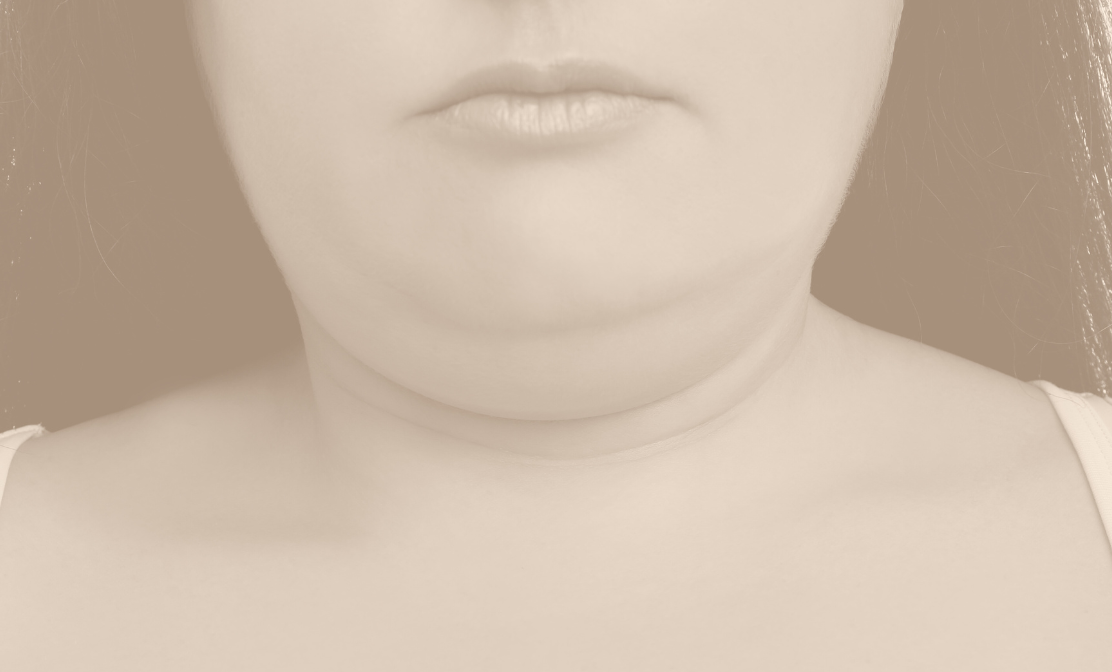
For most women, these are the earliest visible signs of aging. The changes begin in the skin but now extend into the soft tissue beneath it. They are not yet structural in the surgical sense. What I am observing is the beginning of mandibular definition loss: the jawline softens, the lower face feels heavier, and the boundary between the face and neck becomes less distinct. Volume loss is also emerging in the midface, with subtle flattening of the cheeks and under-eye area. Hormonal changes that often begin during this decade, together with genetic aging patterns, contribute to these changes.
Injectables are still doing meaningful work at this stage, but the conversation starts to change. Filler can replace volume. It cannot reposition tissue that has begun to shift. There is a real distinction between adding volume to a face that has lost it and trying to fill your way out of a structural change, and patients deserve to understand the difference before they keep adding more of something that is addressing the wrong problem.
Devices play a more prominent role now as well. Everesse and Quadessy repair skin laxity and assist with collagen remodeling. Helix can also address skin quality and texture that have accumulated over the years.
My job at this stage is to give patients accurate information so they can make decisions on their own timeline. For some women in their early 40s, a mini-facelift is a reasonable consideration. It can be an appropriate option for women who are beginning to notice softening of the jawline and early neck laxity but are not yet candidates for a full deep-plane facelift.
The ideal candidate still has good skin elasticity, minimal descent of the cheeks and midface, and is seeking a refined, natural improvement rather than a more extensive correction. When these changes are addressed early, before significant tissue descent has occurred, the result is often more subtle and natural because the procedure is restoring definition rather than correcting advanced laxity. If tissue descent becomes more pronounced or aging progresses through the midface and neck, it is generally better to wait and perform a comprehensive deep-plane facelift when the timing is right.
Blepharoplasty and Brow Lift: Why the Eyes Age on Their Own Timeline
When someone tells me her eyes look heavy or tired, I am asking a different question: Is this coming from the eyelids, the brow, or both? The answer determines the solution.
The eyes often age on a different timeline than the rest of the face. A woman in her early 40s may notice heaviness of the upper eyelids long before she develops jowls or significant neck laxity. Conversely, a woman in her late 50s may come in convinced she needs upper eyelid surgery when the primary issue is brow descent—or a combination of both.
Brow descent is a structural change that contributes to upper eyelid hooding. Upper blepharoplasty removes excess skin and, when appropriate, fat from the upper eyelids. Lower blepharoplasty addresses fat protrusion and excess skin beneath the eyes. Although there are many surgical procedures for the eyes, not every patient with changes in the eye area needs surgery. Some are better served with filler, devices, and others benefit from a combination of surgical and nonsurgical treatment.
Whether I perform eye procedures on their own or combine them depends on the anatomy and the patient’s goals. When a brow lift and upper blepharoplasty are performed together, they address the underlying cause of eyelid heaviness as well as the excess skin it creates. If a facelift is also planned, combining the procedures allows for a single recovery rather than in separate stages.
Deep Plane Facelift in Pittsburgh: What the Surgery Actually Does
Most patients who have been in consistent care reach a point where they feel the non-surgical options have taken them as far as they can. This is usually when facelift surgery moves from “someday” to “let’s talk seriously,” and for most patients, that moment arrives somewhere around their early 50s.
What I see at this stage is observable facial descent: jowling along the mandibular border, real neck laxity, deeper nasolabial folds, and brow ptosis affecting how the upper eyelids. Tissue movement in the deep fascia, the ligamentous support of the face requires surgical correction to be properly addressed.
My primary technique is the deep plane facelift. A deep plane facelift involves dissection beneath the SMAS layer to free the facial ligaments that hold descended tissue in place. Because the tissue is released at its attachment points before being repositioned, it moves more naturally rather than just being tightened in place. The result tends to last longer and look less operated-on because the geometry of the correction more closely follows that of a natural face.
Recovery from facelift surgery typically involves one to two weeks of visible swelling and bruising, with most patients feeling socially presentable within two to three weeks. Incisions are placed within the natural hairline and around the ear, where they become well-concealed as healing progresses. Results typically last eight to ten years.
When a patient is ready for a facelift, I also discuss what combining it with other procedures might accomplish. A neck lift is almost always part of the plan, since the neck and lower face function as a single aesthetic unit. If the brow or eyelids are also indicated, doing them in a single surgery means one anesthesia and one recovery for a more harmonious overall result.
I am always thinking about how my patients will look at 65, not just how they look after a single procedure. Over-correction is a failure. The right facelift should be invisible to everyone except those who know the patient well.
Facelift Revision Surgery: What Happens When Results Naturally Progress
The results of a facelift last, but they are not permanent. The face my patient had at 52 post-surgery is not the face she has at 61, and that is not a complication; it is simply the passage of time.
A revision facelift, sometimes called a secondary facelift, is performed when the results of a primary procedure have naturally progressed with age, typically eight to ten years after the original surgery. It is more technically involved than a first-time procedure because scar tissue has formed, and the tissue planes are different. But I am not starting from zero. I know her anatomy. I know what her face looked like at baseline, what was changed the first time, and what the tissue can and cannot support now. That history is what makes the revision-facelift conversation different from the original one. It is not “what do you want to look like”; it is “here is where we are, here is what makes sense, here is what we can achieve together.”
Revision surgery does not mean the first procedure failed. It shows that the patient aged normally after a procedure that helped her look like herself for nearly a decade. That is what facelift surgery is supposed to do. Revision facelifts are more complex than a first facelift because of pre-existing scar tissue and changes in the surgical planes, so careful planning and an experienced surgical approach are essential. I take extra care to assess the tissue, minimize the risk of complications, and discuss with every patient how we approach revision surgery differently to prioritize both safety and a natural result. Being transparent about these added complexities is part of providing long-term care and reassurance as you consider the full journey.
Frequently Asked Questions About Facial Aging
At what age should I consider a facelift?
There is no single answer. It depends on genetics, lifestyle, and how your face has aged. Some patients are candidates for facelift surgery in their mid-40s, while others are well into their 60s before the conversation becomes appropriate. A consultation at Bellissimo Plastic Surgery in Pittsburgh is the most reliable way to find out where you stand.
What is the difference between a mini facelift and a full facelift?
These terms mean different things to different surgeons. At Bellissimo, a mini facelift refers to a neck lift, which is a more targeted, earlier procedure for patients who are beginning to show signs of aging in the neck and jawline. A full facelift, as I perform it, is a deep-plane facelift that comprehensively addresses the cheeks, jawline, and neck.
What is a deep plane facelift?
A deep plane facelift involves dissection and release of the SMAS layer at a deeper level than a standard facelift. By freeing the ligaments that hold descended tissue, it can be repositioned where it came from, not just tightened in place. It is not the same as a SMAS plication, a lunchtime facelift, or a thread lift.
How long do facelift results last?
Typically eight to ten years, depending on technique, genetics, skin quality, and lifestyle. Patients who maintain consistent skincare and sun protection tend to preserve their results longer.
What is facelift revision surgery, and when is it needed?
How much does a facelift cost in Pittsburgh?
Can a facelift be combined with eyelid surgery or a brow lift?
How do I know if I need a facelift or if injectables are still enough?
Scheduling a Facelift Consultation in Pittsburgh
When I see a patient, whether it is her first appointment in her early 30s or a follow-up in her 60s, I am not looking at her face in isolation. I am looking at it in the context of everything I know about how it has changed, how it is likely to change, and what it has responded to along the way.
The goal has never been to stop the aging process entirely. It has been to help patients age in a way that looks like herself, not a version frozen in time, not overcorrected, but a woman who looks well, rested, and like herself at every stage.
If you are considering a facelift near Pittsburgh, a brow lift, eyelid surgery, or just want to understand where your face is in its journey and what makes sense right now, I invite you to schedule a complimentary consultation at Bellissimo Plastic Surgery. We see patients at our Pittsburgh and Monroeville locations, and the conversation costs you nothing but your time.