Table of Contents
Many patients come to their consultation asking about the Halo laser by name. It is one of the best-known resurfacing lasers, and it is a fair question. When I chose the resurfacing laser for our practice, I chose Helix, and I have treated patients from across the Pittsburgh area with it since 2023.
Here is what Halo is, and why I believe Helix delivers more of the results my patients want.
What Is the Halo Laser?
Halo is a hybrid laser made by Sciton. It pairs two lasers in one treatment: an erbium laser that resurfaces the outer layer of the skin, and a second laser that heats the deeper layer without breaking the surface. It is used to improve sun damage, fine lines, texture, and enlarged pores.
Patients often ask whether Halo is a CO2 laser. It is not. Halo resurfaces with an erbium laser, while Helix resurfaces with a CO2 laser. That difference matters more than most patients realize.
Why I Chose Helix
We have worked with DEKA, the Italian company behind Helix, for years. Before Helix existed, their CO2 laser was the resurfacing laser I relied on. When DEKA paired that CO2 laser with a second, deeper laser on a single platform, I traded in my original CO2 laser for Helix. I did not want to give up the strength of CO2, and with Helix, I did not have to.
Helix gives me a CO2 laser for resurfacing and a 1570-nanometer laser for tightening. I can fire them together, adjust the balance between them, or use either one on its own. That flexibility allows me to build a treatment around each patient rather than fitting every patient into the same treatment.
Halo vs. CO2: Why Heat Matters
Halo and Helix both pair a resurfacing laser with a deeper laser. The difference is the resurfacing laser itself. An erbium laser removes the outer layer of skin with relatively little heat. A CO2 laser delivers more heat into the skin as it resurfaces, and that heat causes the skin to contract and prompts the body to build new collagen. Medical references describe CO2 as producing more skin tightening than erbium.
I tell my patients that heat drives results. The more heat we can deliver safely, the more improvement we see in lines, texture, and firmness. The challenge with CO2 has always been downtime, and that is where Helix changes the equation. Because Helix pairs CO2 with its deeper laser, I can treat at a higher level while keeping recovery to about three to four days of redness for most patients.
Tightening Built In: Sultra
The deeper laser in Helix is also available as its own treatment, which we call Sultra. Sultra leaves the surface of the skin intact and heats the deeper layer to tighten thin, crepey skin. Because it does not resurface, it can treat larger areas of the body, including above the knees, the arms, and the décolleté, and it is suitable for all skin types.
For crepey skin that sits over cellulite or a little stubborn fat, I pair Sultra with Onda Pro in a protocol I call the Luxe Lift. Most patients need two treatments, spaced six to eight weeks apart, with no real downtime. I explain the Luxe Lift in more detail in my guide to non-surgical skin tightening.
One Laser, Three Treatments Matched to Your Downtime
Not every patient can step away from work for a week, and not every patient needs to. Helix gives me three treatments, so I can match the intensity to your goals and your schedule.
- CoolPeel: CO2 resurfacing at lighter settings, for refreshed tone and texture with minimal downtime.
- Fusion: CO2 and the deeper laser together, our most comprehensive treatment for lines, sun damage, texture, and laxity, with about three to four days of redness.
- Sultra: the deeper laser on its own, for tightening crepey skin on the face or body with no real downtime.
Patients who are drawn to Halo for a quick recovery often find that CoolPeel fits the same need, with the option to step up to Fusion when they want more.
Helix vs. Halo Recovery: What to Expect
Every Helix treatment begins with a skin analysis using our Glimpse imaging system. On the day of treatment, we apply a topical numbing cream for about twenty minutes, and a cooling device blows chilled air across the skin throughout. Most patients describe warmth and occasional tingling.
After a Fusion treatment, the skin feels like a sunburn for the first hour or two. Over the next few days, it turns red and slightly swollen and develops a fine, sandpaper texture as the tiny treated areas heal. That texture sheds on its own by about the fourth or fifth day, revealing smoother skin underneath. Most patients are healed within about a week, and many return to work within a day or two. Protecting the skin from the sun throughout recovery is essential.
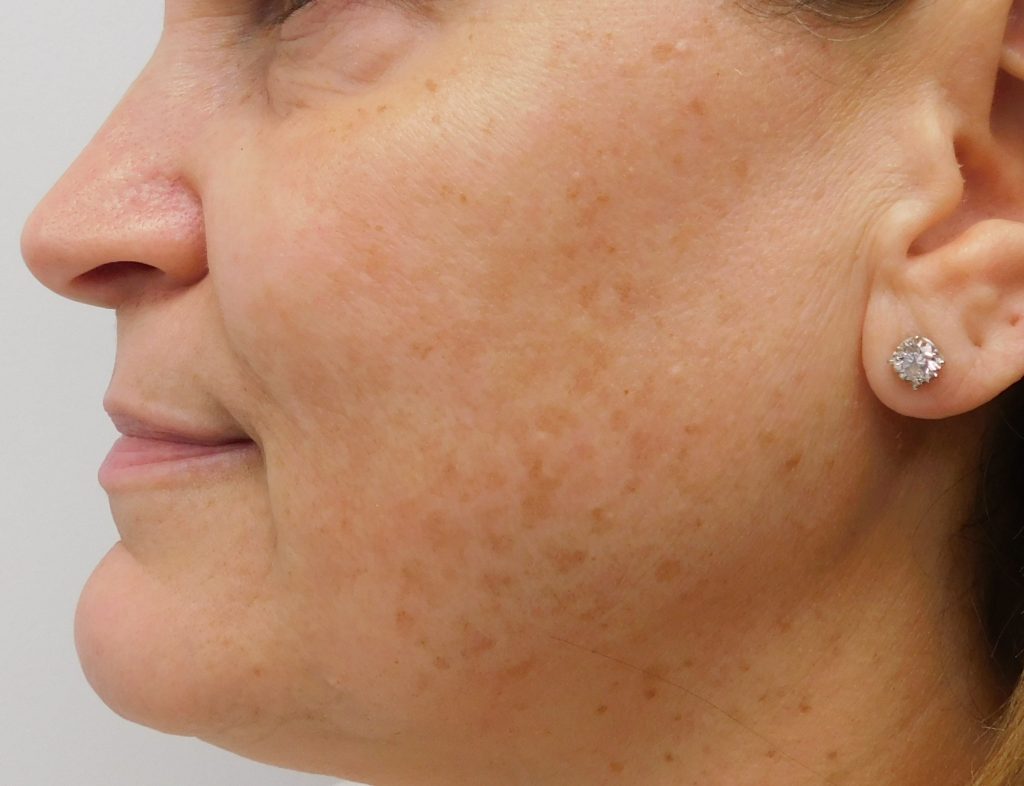
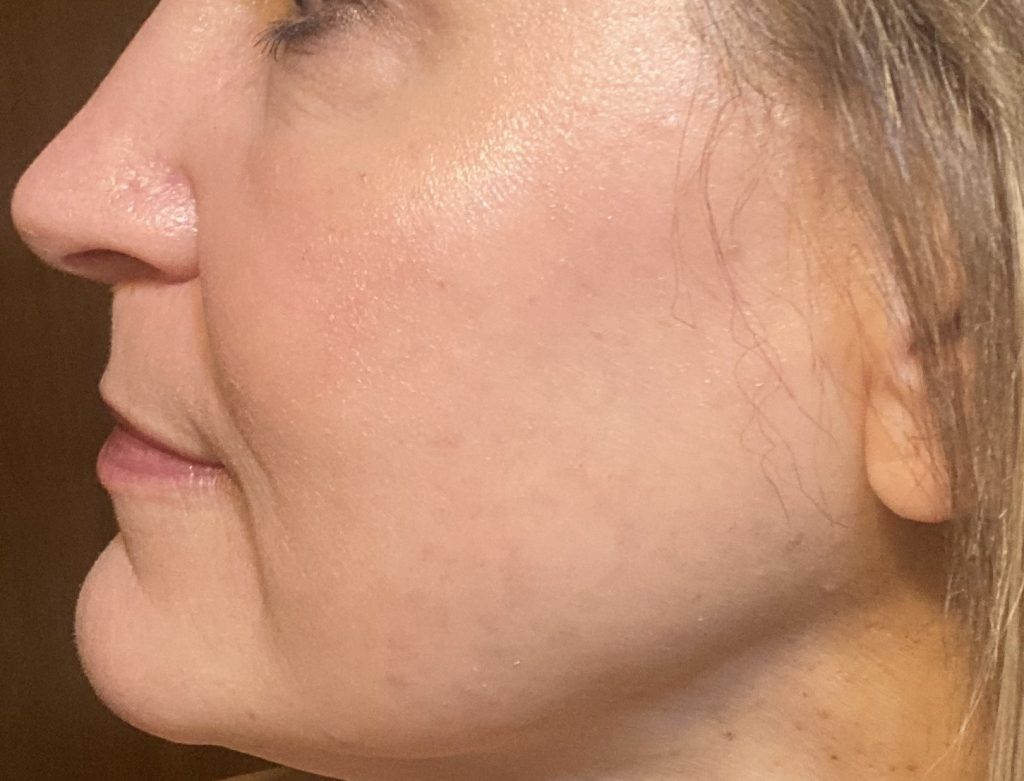
Helix Before and After: The Results You Can Expect
Most patients see a smoother texture and a more even tone as soon as the skin has shed, and results continue to improve over the following months as new collagen builds. For most patients, one Helix treatment achieves what once took two to four CO2 treatments, with annual maintenance to preserve the results.
For a closer look at each Helix treatment and a day-by-day recovery guide, read my complete guide to Helix laser treatment, or explore the other devices in our aesthetic center.
Frequently Asked Questions
Is Halo a CO2 laser?
No. Halo uses an erbium laser to resurface the skin. Helix uses a CO2 laser, which delivers more heat and more skin tightening.
Is Helix better than Halo?
Both are hybrid lasers, but I chose Helix for my patients. Its CO2 laser delivers the heat that drives resurfacing and collagen growth, its deeper laser can tighten skin on its own as Sultra, and it allows me to tailor each treatment to a patient’s goals and schedule.
Does Bellissimo offer Halo?
No. I chose Helix for our practice, and it is the resurfacing laser we use at Bellissimo.
Does the Helix laser tighten skin?
Yes. The heat from the CO2 laser causes the skin to contract and build new collagen, and the deeper laser tightens the skin further. Sultra uses that deeper laser on its own to tighten crepey skin.
Does Helix hurt?
We apply a topical numbing cream before treatment and use a cooling device throughout. Most patients feel warmth and occasional tingling, followed by a sunburn sensation that is most intense in the first hour or two.
Is Helix safe for darker skin tones?
Yes, with the right settings and preparation. Darker skin carries a higher risk of pigment changes after laser treatment, so we evaluate your skin carefully and may recommend a skin-lightening protocol two weeks before treatment.
Schedule a Helix Consultation in Pittsburgh
If you have been researching Halo, I would welcome the chance to show you what Helix can do for your skin. At your consultation, we will evaluate your skin, talk through what you want to change, and recommend the Helix treatment that fits your goals and your schedule.
Schedule a complimentary consultation at our Shadyside or Monroeville office.